
Documentation of the nyssr.net
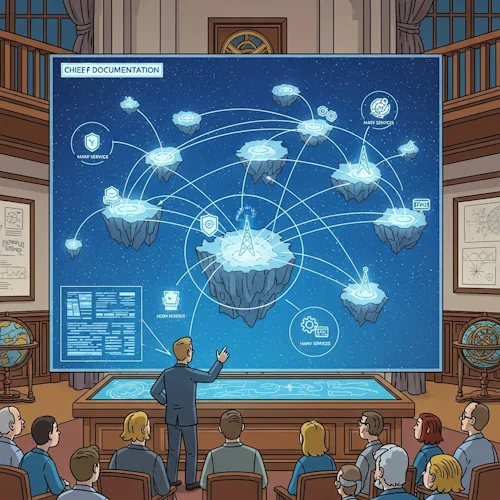
This is the documentation of nyssr.net, a Java framework for distributed applications. It explains the runtime model from the smallest building blocks to complete node networks.
Start with the fundamentals
The most useful order is:
- Nodes — the small plugin-based runtime
- Targets — the objects that receive messages
- Messages — asynchronous object-to-object communication
- Namespaces and services — how functionality is organized and discovered
- Plugins and applications — how a node becomes useful
Explore by topic
- Basics: nodes, targets, messages, namespaces, and segments
- IDs and addresses: how targets, nodes, and namespaces are identified
- Services: registries, dependencies, starters, and listeners
- Plugins: how capabilities are loaded into a node
- Messages and records: type-safe data exchanged across the network
- Job engine and timers: asynchronous work and scheduled actions
- Configuration and utilities: operational tools for real deployments
Key idea: A nyssr.net installation is a network of small nodes. Plugins define what each node can do; messages connect the parts.
Need a practical starting point?
If you want to run code rather than read concepts first, begin with Getting Started. It builds a plugin that sends messages and measures the resulting network traffic.
The documentation is a work in progress. Some topics may still be incomplete or need clearer examples. Please use the forum or email to report questions and suggestions.
Related Pages
Console
Get information and start actions
Libraries
Libraries for the kernel and tools.
Configuration
Configuration of the nyssr.net
IDs and Addresses
Addresses and their components
Introduction to nyssr.net
Get a concise introduction to the structure and core operation of the nyssr.net distributed system.
Logging
The logging framework for nyssr.net
Messages
Envelopes, Records and more
Applications
Explore distributed nyssr.net applications built from microservice factories, with automatic load balancing and modular Web or Swing RemoteSkin UIs.
The job/batch engine
Run many batches in multiple threads simultaneously
Microservices
Usage and supplied services
Namespaces
Namespaces and their services
More interfaces and classes
Reference key nyssr.net interfaces and classes for service registration, node shutdown, coded exceptions, and password hashing.
Plugins
Usage, included plugins
Records of the Kernel
Records provided by the nyssr.net Kernel
Services
Local services for direct use
Session Management
Login, Logout, User, Roles, Permissions
Utilities
Little gems
Software Update
Software download and installation
Timer
Timer messages